Finding and Fixing a Commercial Roof Leak in Seattle
A commercial roof leak rarely announces itself politely. More often, it shows up as a ceiling stain that was not there last week, a drip near a wall that seems to move after every storm, or a tenant complaint that sounds small until someone opens up a ceiling tile and finds damp insulation. In Seattle, that kind of problem deserves quick attention, not panic, but definitely action.
One thing I have learned from roof investigations is that the visible leak inside the building is often only part of the story. Water can travel. It can enter at one vulnerable detail, move along the roof system or structure, and show up somewhere else entirely. That is why the smartest Atlas roof services response is not to guess, and not to jump straight to the nearest patch. The better approach is to treat a leak as a building problem that needs a careful diagnosis.
For commercial property owners and managers, that distinction matters. A roof that is not weatherproof or shows clear evidence of leaking is treated as a maintenance problem in Seattle’s inspection framework. Beyond that, moisture issues tend to become more expensive when they are allowed to linger. Maintenance and inspections exist for a reason: to spot weakness, deterioration, hazards, and needed repairs before the damage spreads.
Why a leak can be harder to find than it looks
People outside the roofing trade often expect the source of a leak to sit directly above the wet spot. Sometimes it does. Many times it does not.
Commercial roofs have seams, penetrations, flashings, transitions, and drainage paths. Those areas matter because leaks often begin at details rather than in the middle of a wide, uninterrupted field of roofing. Guidance on roof deterioration consistently points to persistent leaks, visible surface breakdown, and failures at flashing and penetrations as key warning signs. That aligns with what experienced investigators see in the field. The obvious symptom inside the building may be caused by a much less obvious failure up top.
A rushed repair can miss that reality. If someone seals one suspect area without understanding the path of water entry, the leak may continue, just more quietly for a while. That is one reason the industry guidance leans toward a thorough investigation by qualified roofing professionals or consultants. The goal is to identify the actual source of water entry and match the repair to the real problem.
There is also a practical business reason to slow down enough to investigate properly. Commercial roofing services cost less when the scope is clear. Owners get into trouble when they pay for repeated short-term fixes that never quite solve the issue. One good diagnosis is usually cheaper than three bad guesses.
The first question: is this a repair issue or a replacement issue?
Not every leak means the roof is finished. Some roofs need targeted repair and a renewed maintenance plan. Others have crossed the line into broader failure and should be considered for replacement.
That line is not based on one wet ceiling tile. It is judged by both age and visual inspection. The key phrase there is “both.” A newer roof with one localized failure may be a good candidate for repair. An older roof with persistent leaks, widespread surface deterioration, and repeated failures at vulnerable details may be telling you something different.
The warning signs that deserve real attention are straightforward. Persistent leaks matter. Visible deterioration matters. Failures at flashing and penetrations matter. Those are not cosmetic annoyances. They are signals that the roofing system may no longer be doing its basic job of keeping water out.
Seattle guidance on roofing points in that same direction: replacement should be considered when a roof shows clear deterioration or damage, rather than minor repair needs. That distinction is useful because it keeps owners from doing too much or too little. Replacing a roof too early is expensive. Holding onto a failing roof too long can be even more expensive.
What a proper leak investigation usually looks like
A solid roof leak investigation is methodical. It starts with observation and moves toward confirmation. The exact process can vary with the building and the roof system, but the thinking behind it is consistent.
First, the investigator wants to understand the complaint. Where did the water appear? Is the leak constant or only during certain weather conditions? Has this happened before? A persistent leak in the same area says something different from a first-time event.
Next comes a visual inspection. Since roofs should be inspected annually for deterioration or damage, many well-managed properties already have at least some inspection history. That history can be helpful. If there were earlier notes about failed flashing, surface wear, or trouble around penetrations, those details help narrow the search.
The roof itself is then evaluated with special attention to likely weak points. Experienced roofing professionals are not just looking for holes. They are looking for patterns of failure, places where water can enter, places where repairs have been attempted before, and details that no longer look sound.
At the same time, the investigation should not ignore the interior. Water staining, damp materials, and the location of visible symptoms can help create a map of probable water travel. That map is not proof on its own, but it helps connect interior evidence to rooftop findings.
What matters most is restraint. A careful investigator does not promise certainty too early. The source of water entry should be established as clearly as possible before major repair decisions are made.
Where leaks tend to start
Commercial roofs can fail in several ways, but guidance and field experience tend to bring attention back to the same vulnerable areas.
- Flashing failures
- Roof penetrations
- Visible surface deterioration
- Localized moisture damage that has gone uncorrected
- Areas with a history of persistent leaks
This is one of those situations where simple categories are useful, but only if they are not treated as shortcuts. For example, if a leak appears near rooftop equipment, the equipment itself may not be the true issue. The surrounding roofing detail may be the problem. If there is obvious deterioration in one section of membrane or covering, the cause may still involve a nearby seam, joint, or transition.
That is why a leak investigation is different from a quick walk-through. You are not just identifying damage. You are trying to understand the path water took to get from outside to inside.
The cost of waiting too long
A small roof leak has a way of sounding manageable. Sometimes it is. Sometimes it is the first visible sign of a much larger moisture problem.
Maintenance guidance for commercial and industrial roofs emphasizes early identification of weakness, deterioration, hazards, and needed repairs because that is how you prevent minor issues from becoming larger failures. Moisture is especially unforgiving in that regard. If flashing has failed or water is getting in around a penetration, waiting does not usually improve the situation. It tends to enlarge the repair area, complicate the diagnosis, and increase the odds that more building materials are affected.
There is also the issue of uncertainty. When owners delay action, the building remains exposed through additional weather cycles. Each new event can introduce more water and make the original source harder to isolate. A leak that could have been solved with a focused repair can turn into a broader discussion about system condition and service life.
I have seen owners hesitate because they fear being told they need a full replacement. That concern is understandable. Good commercial roofing services should not push a replacement when repair and maintenance will do the job. At the same time, a professional should not pretend a roof is sound when the evidence points the other way. Honest judgment matters here.
Repairing the leak without chasing symptoms
Once the source is identified, the repair should match the condition of the roof. That sounds obvious, but it is where many projects go sideways.
A localized failure may call for a localized repair. If the roof is otherwise in serviceable condition, correcting a failed detail and restoring the weatherproofing can be the right move. The goal is not just to stop visible dripping for a week. It is to address the route of water entry so the roof can return to performing as intended.
On the other hand, if the investigation finds broader deterioration, recurring failures, or multiple signs that the system is breaking down, the “repair” conversation becomes more strategic. A patch on a roof that is near the end of useful service may not be a good investment. In those cases, the leak investigation becomes part of a bigger decision about replacement timing and scope.
This is where experience helps. The cheapest immediate fix is not always the lowest-cost choice over the next year or two. But the most aggressive option is not automatically the smartest one either. Good judgment sits in the middle. It weighs roof age, inspection findings, visible deterioration, leak history, and the pattern of failures.
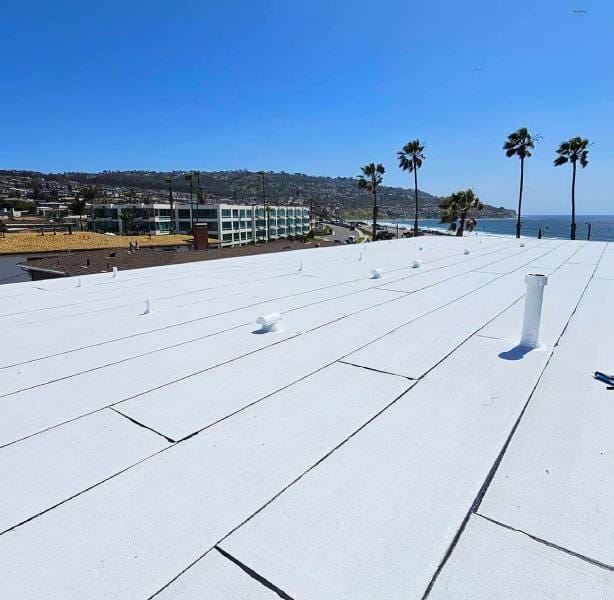
Why annual inspections matter so much in Seattle
Annual inspection may sound basic, but it is one of the strongest habits a building owner can adopt. Seattle guidance specifically notes that roofs should be inspected annually for deterioration or damage. That is not bureaucratic busywork. It is practical maintenance.
An annual inspection creates a baseline. It shows whether a localized issue is staying localized or growing. It helps identify flashing problems, surface wear, or weak areas before they lead to interior damage. It also gives owners something valuable when a leak does occur: context.
Without that context, every leak feels like an emergency discovered in a vacuum. With it, the conversation becomes more grounded. You can compare current conditions to prior observations. You can tell whether a problem is new, recurring, or part of a wider pattern. That changes the quality of the repair decision.
For property managers overseeing several sites, annual inspection also makes budgeting more realistic. It is much easier to plan for maintenance and eventual replacement when the roof’s condition has been observed consistently.
When repair stops making sense
A commercial owner usually asks some version of the same question: “Can we fix this, or are we wasting money?”
The fairest answer is that repair stops making sense when the evidence shows the roof is no longer dealing with isolated issues. Persistent leaks are a major clue. Widespread visible deterioration is another. Repeated failures at flashing or penetrations are especially important because those details are critical to weatherproofing. If several of those signs are present, it may be time to consider replacement rather than continuing to chase one leak after another.
That does not mean every older roof needs to be torn off at the first sign of trouble. Age matters, but age alone does not decide the issue. A roof should be judged by age and visual inspection together. That balanced view protects owners from overreacting to small repair needs while still recognizing when a system is in clear decline.
If you manage a commercial building in Seattle, the practical takeaway is simple: do not let frustration drive the decision. Repeated emergency calls can make replacement sound attractive even when a focused repair and proper maintenance could stabilize the situation. The opposite can happen too. Attachment to a lower short-term cost can keep a failing roof in service longer than it should be.
Permits and the Seattle factor
One detail that often surprises owners is that permit requirements are not one-size-fits-all. Seattle’s guidance makes clear that roof replacement and repair requirements vary by building type. Some residential roof repairs may not require a permit under certain conditions, but commercial projects are handled through the city’s permitting process.
That matters for planning. If the leak investigation points toward a larger repair or replacement, owners should expect the project to move within that commercial permitting framework. That is another reason not to wait until the problem becomes urgent. The more time you have to investigate, define scope, and coordinate the right path, the better the outcome tends to be.
It also reinforces why the work should be approached professionally. Commercial buildings bring responsibilities beyond simply stopping water. Inspections and permitting help keep buildings safe, accessible, and in good repair. Roof work sits squarely inside that bigger picture.
A practical response plan for owners and managers
When a leak appears, the best response is calm and disciplined. You do not need theatrics. You need information, containment, and qualified help.
- Document where the leak appears and when it occurs
- Arrange a prompt roof inspection by qualified professionals
- Compare current findings with any prior inspection or maintenance records
- Repair confirmed localized failures before they spread
- Reassess for replacement if leaks are persistent or deterioration is clear
That short plan works because it respects what roof leaks actually are: symptoms with causes that need to be traced. It also keeps owners from bouncing between denial and overreaction.
One small but important point is recordkeeping. A simple history of inspections, repairs, and recurring trouble areas can make future leak investigations much sharper. It is not glamorous, but it is useful.
Choosing the right kind of help
Not all roofing help is equal, especially when the problem is not obvious. For a true leak issue, the value comes from careful investigation, not just speed. Qualified roofing professionals or consultants are recommended because they are there to determine the actual source of water entry and the repair required. That phrase, “actual source,” is doing a lot of work. It separates real diagnosis from guesswork.
When evaluating commercial roofing services, owners should pay attention to how the problem is discussed. A thoughtful professional will usually ask detailed questions, review the history if available, inspect vulnerable areas carefully, and explain the difference between a Atlas Roofing Services targeted repair and signs of broader failure. That kind of conversation builds confidence because it is tied to roof condition, not sales pressure.
A weak response often sounds different. It jumps too quickly to a universal answer. Every leak means replacement, or every leak can be sealed cheaply. Real roofs are not that simple.
The bigger maintenance lesson
A leak is a nuisance when it is small. It becomes a management problem when it repeats. Eventually, if ignored, it can turn into a capital planning issue. That progression is why routine maintenance matters so much on commercial buildings.
The purpose of maintenance is not just to react after damage appears. It is to identify weakness, deterioration, hazards, and repair needs early enough that the roof stays serviceable longer. Maintenance can extend roof life by catching moisture issues, failed flashing, and other localized problems before they become larger structural or leak-related failures. That is not theory. It is the practical payoff of paying attention before the ceiling starts dripping.
Seattle’s guidance supports that mindset from several angles: roofs should be inspected annually, clear leaking is a maintenance concern, and repair or replacement decisions should reflect actual roof condition. Put together, those points create a reliable playbook for owners.
A commercial roof leak in Seattle is not something to ignore, and it is not something to diagnose by hunch. Start with the evidence. Inspect carefully. Focus on the actual source of water entry. Repair what is truly repairable. Replace when deterioration and repeated leaks show the roof is no longer doing its job. That approach is steady, defensible, and usually far less expensive than letting the problem choose the timeline for you.